Who runs it I build.
I build.
I don't consult.
I sit with founders and build the things that are hard to build alone. Strategy, prototypes, AI systems. WiZRD is the part of that work I turned into a system.
How this started.
For a few years I did founder work and walked away each time. The thinking lived in my head and a handful of decks. A new engagement meant starting the explaining over from scratch. The same explaining, every time.
So I started writing it down. Folders. Markdown files. Decisions, voice, working patterns, the state of the work. Context structured so any AI could pick up where the founder left off, without the founder in the room.
The first time I loaded a full context library into a model, the change was obvious. The AI stopped guessing. It knew the company, the history, the way the founder wrote. It felt like the model went from intern to co-founder.
Now I run that system with other founders. That system is WiZRD.
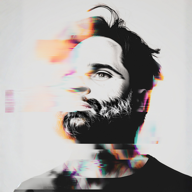
Karl
Founder · WiZRD · Helsinki
Four working rules.
These aren't a values page. They're the actual filter for whether an engagement is a fit.
Building the real thing over talking about building it
Decks are an artifact, not the work. I'd rather show you a prototype than a slide describing one.
Fit and chemistry over volume
A few engagements at a time, run properly. If the call shows it isn't a fit, I say so.
Honest disagreement over comfortable agreement
I pressure-test before I commit. Once the reasoning is clear, I decide fast and move.
Autonomy and trust over process and oversight
No status theatre. You get the work and a short note on what changed. That's it.
Recent work.
Named engagements, not categories. The work runs across strategy, prototypes, and AI systems.
WorkRole / year
01
10team
Strategy + AI setup · 2020
02
WiZRD
Founded · Product & AI advisory · 2024
03
Guidr
Strategy + MVP · 2024
04
Moovmoor
Concept → MVP · 2024
05
VAISTO
Co-founded · AI consultancy · 2025
06
Jussarö
Concept + MVP · 2026
07
Kotikalle
Concept · 2025
08
Pickleball.fi
Concept + MVP · 2026
Thirty minutes.
No deck.
If it fits, we go.